
Posts by Phil Charles
Why you should be a life-long learner

You finish high school, go on to university, and maybe pursue graduate education – all with the plan of preparing yourself for a career. When you are in your early 20’s, school feels like a means to an end – you have been at school for 16 years or more. Once you have a few years in…
Read MoreA Whole New Mind – a whole new world

A Whole New Mind: Why Right-Brainers Will Rule the Future by Daniel Pink describes the dawning of the ‘Conceptual Age’. Just as information workers surpassed physical labourers in economic importance, Pink claims, the workplace terrain is changing yet again, and power will inevitably shift to people who possess strong right-brain qualities – inventiveness, empathy, meaning. According…
Read MoreFour principles of problem-solving

George Pólya in his 1957 book How to Solve It suggests the following steps when solving a problem: First, you have to understand the problem After understanding, then make a plan. Carry out the plan. Look back on your work. How could it be better? If this technique fails, Pólya advises: “If you can’t solve a problem, then there…
Read MoreWhat is micro-learning and why is it important?

Micro-learning involves courses with smaller chunks of content, which research showing much better information retention and overall comprehension. [1] There is a common misunderstanding that micro-learning is needed because attention spans are getting shorter. The “Goldfish Myth” states that the average human attention span is now just 8 seconds, which is less than the average…
Read MoreThe Future of Professional Development – Mini-courses

In today’s world professionals are busy, yet want to progress their professional practice and their career, while balancing life and work. Professional development opportunities are limited and often difficult to translate what you learn to your day-to-day work. Graduate qualifications for professionals are limited, especially for those outside the catchment of university campuses. An answer…
Read MoreHow many productive hours a day do you work?

So what is productive time? Before I answer the question, how about an exercise. Get a timer (can be on your watch or your computer or a kitchen timer) and set it for 60 minutes and then just work on a priority task during those 60 minutes – nothing else. Let me tell you, at…
Read MoreThe 7 Habits of Highly Effective People
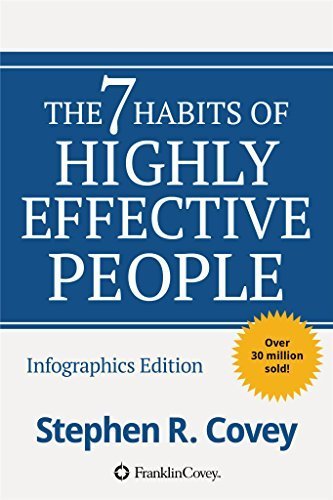
The 7 Habits of Highly Effective People was originally written by the late Stephen Covey in 1989 and is still a best seller. A very worthwhile, useful manual for self-improvement. Covey advises: “Private Victory precedes Public Victory. Algebra comes before calculus.” First, we must master ourselves, then we can achieve outward success. Much of what you find in…
Read MoreEvernote resources you can use

Evernote is one of my favourite applications for collecting research and storing information. It can also be used for sharing your work with others and presenting your work! It is an indispensable tool in my toolbox and a key productivity tool. While it is easy to get started with Evernote, it has many features, incredibly deep and…
Read MoreHow to use Evernote effectively

Evernote is a very powerful program available on the web, on your desktop and on your mobiles (phone, tablet). There is a free version, a premium version (more functions and storage for the individual) and a business version allowing team collaboration. You can clip items from the web, upload documents or images or write notes…
Read MoreIs Micro-learning the answer?

Micro-learning is the process of learning complex skills in short, focused segments less than 10 minutes. Providing training by video, short articles and reflection exercises, on multiple devices through various web technologies. Micro-learning can be undertaken in short bites, so there is less cognitive load on learners and information is easier to absorb, retain, and recall.…
Read More